An original Coastal Waters Dive Club group of 16 decided to go to Banda Neira for our 2026 club overseas dive trip. It all started back in February 2025 when a group of six members had a very successful trip to Raja Ampat, in the same Indonesian / West Papua region. Our interest in Banda Neira was sparked by Kevin and his interest in its history as the famed Spice Islands. Kevin had always wanted to travel there.
As an aside, the islands were known as the Spice Islands because of the nutmeg, mace and cloves that were exclusively found there, the presence of which sparked European colonial interests in the 16th century. European powerhouses of the time (the English, Portuguese and Dutch) competed and fought over the spices due to their perceived medicinal properties. Many locals were massacred in the 17th century during the Dutch–Portuguese War, also known as the Spice War. The Dutch East India Company took over the islands for many years and held a monopoly on bringing spices to Europe.
Back to our trip…. due to several reasons including health, by the time we left for the trip, our group had been cut down to nine intrepid travellers: Cath, Sue, Cindy, John, Helena, Kevin and his wife Jane, Sonya and I (Tim).
We researched and found that “Blue Motion” was a well-regarded dive operation on Banda Neira. Plus, we had a recommendation from Heather as she and some friends had been there before and said the diving was excellent. We also liked the idea that it was a very affordable scuba diving destination (flights about $1600 per person). The diving component was approximately $110 per day for two dives, and the accommodation was about AUD $35 to 45 a day.
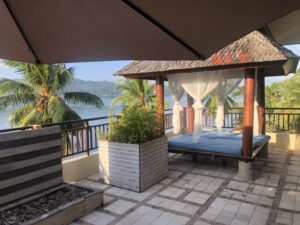
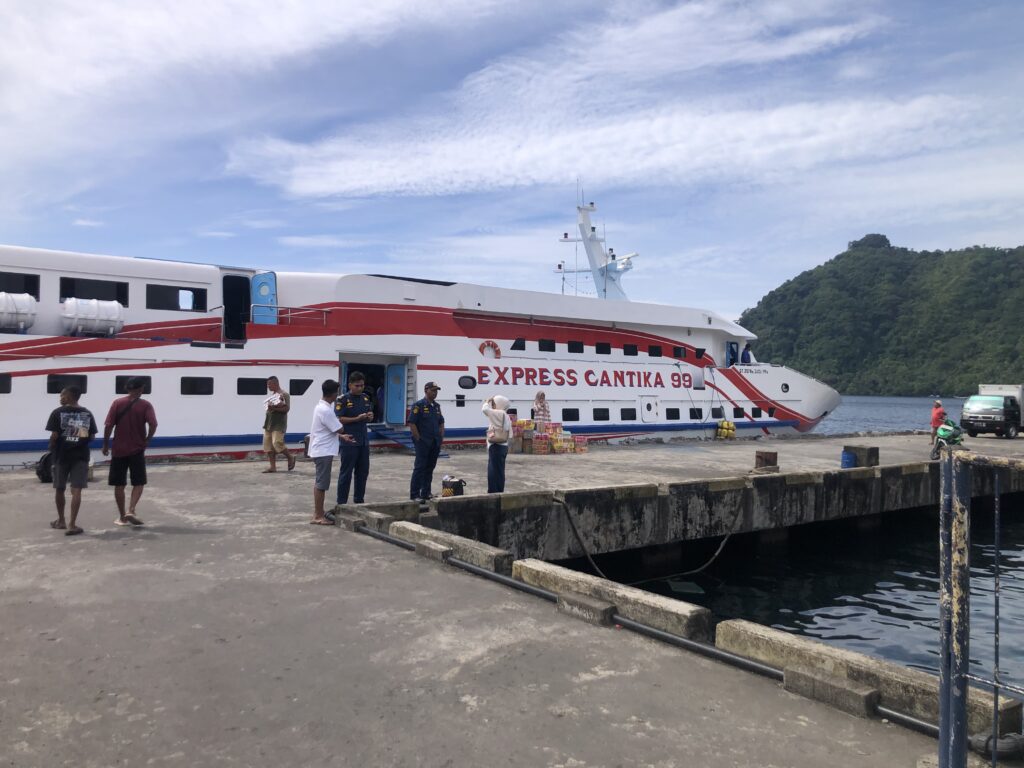
Getting there was the biggest hurdle. Banda Neira lies approx. one thousand kilometres directly north of Darwin. However, getting there was complicated. Our best transport option was to fly Adelaide to Sydney, Sydney to Jakarta (Indonesia), and then Jakarta to Ambon (also Indonesia), with one night spent in Jakarta and two nights in Ambon on the way. In Ambon, we decided to rest and splurge (plus there was limited availability of standard rooms) and get Presidential apartments, which were quite luxurious and we spent two relaxing days there. From Ambon, we then had to take a 5-6 hour fast ferry ride to our destination, Banda Neira.
Once you get to the port in Banda Neira it’s just crazy. Lots of local men board the vessel and try to take your bags expecting cash to help you get the 30-kilo bags onto the wharf and into their taxis. Probably their only source of income, but they were coming on the boat while everyone is pushing and shoving trying to get off. It all got a bit stressful.
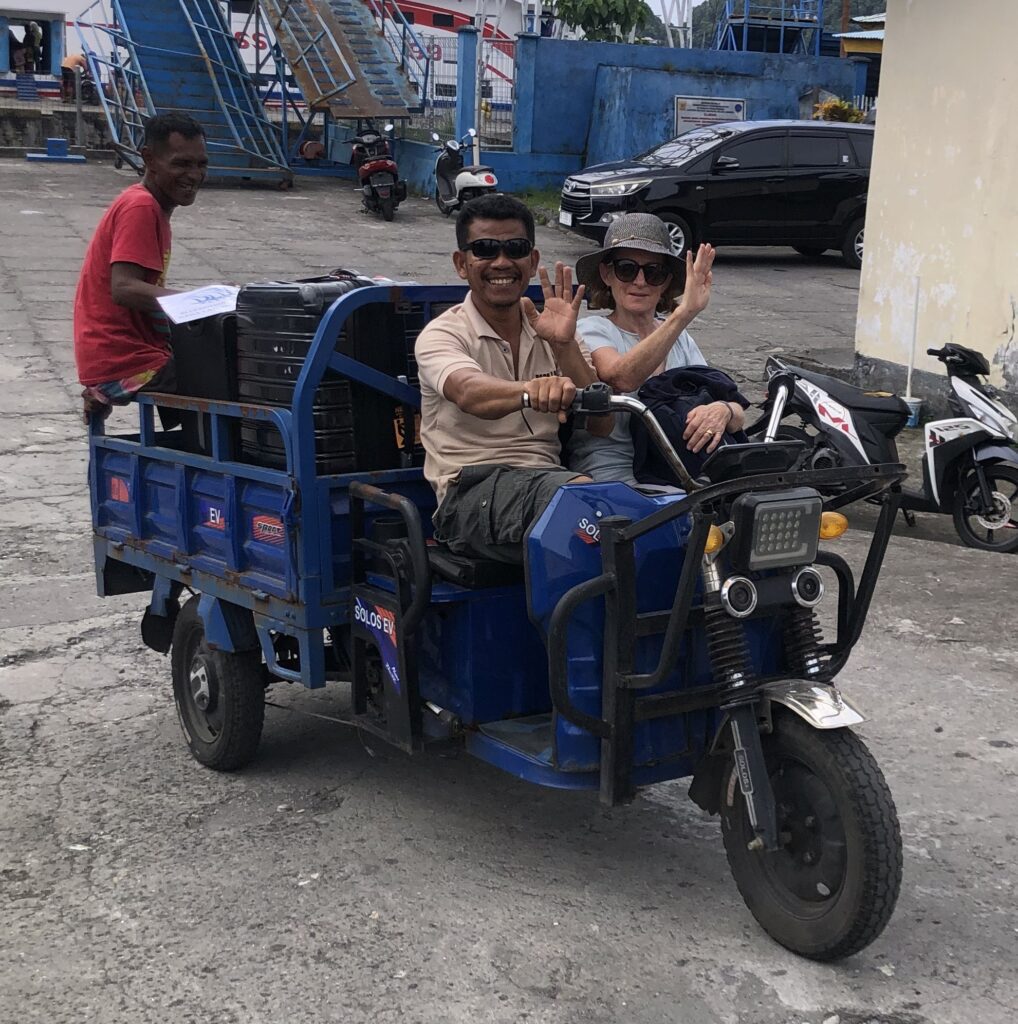
Luckily, we had someone from Baba Lagoon, our accommodation, meet us at the wharf. Once we were all off the ferry and all the luggage was accounted for, the luggage was piled onto a motorbike with a rear carriage and we made our way to “Blue motion” dive centre and our accommodation (located together) which was a ten-minute walk from the port.
Once we found our rooms, I think we all had the realisation that you get what you pay for (eg. a $45-a-night room doesn’t put you in Western luxury). We knew before we left that there was going to be no hot water or a fridge, but the rooms were adequate and clean for a 10-night stay, considering we would be out all-day diving. Thankfully the air conditioners worked well and were a blessing in the humid, hot weather when it was time to rest.
First Day’s Dive brief
We got a bit of a shock during the first day’s dive brief. The dive leader mentioned that it was low season, and that high season (from September to November) was when we’d see Hammer head sharks and large pelagics. March was low season. We were expecting to see pelagics! The sort-of good news was that though High season was when you see the bigger stuff, the water clarity is poor (or at least low). March is best for clarity (visibility from 20-50m) and for looking at smaller stuff.
Most of our dives were drift dives on deep walls of 30-100m or large slopes. The dives for the day would be posted on the notice board with dive times and locations, which changed depending on how far we had to travel each day.
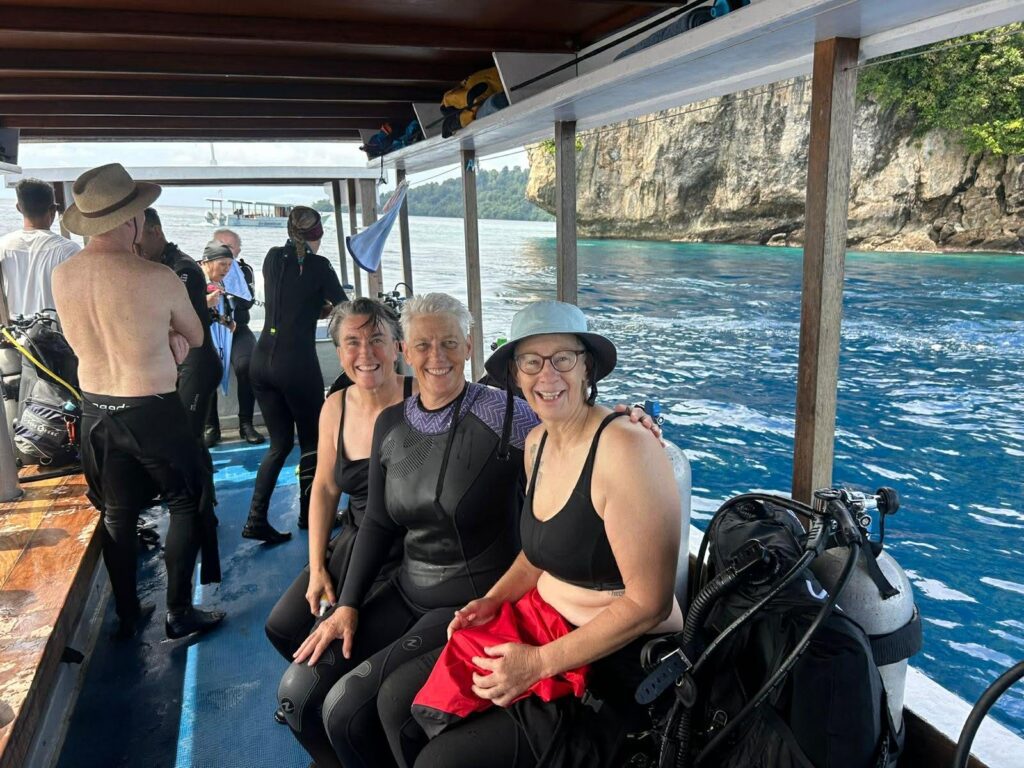
Each day, the staff would load the boats, we would hop on, check our gear and we would take off to the dive spots and do the first dive. After the dive, we would have a dive interval of about an hour and a half on the boat, with hot drinks (or water) and sugar donuts or banana pastries. The sugar donuts were my favorite! Then we’d have a second dive at a different location, with snakes for the boat ride back (maintaining our CWDC tradition!).
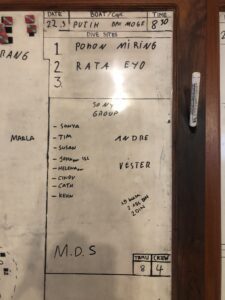
We all took our gear off the boat, washed our gear, hung the gear on the racks and looked into what was on offer for lunch. Lunch was provided in the form of a bento box – it was delicious! Note that the carrying and cleaning of our own gear was our decision – other divers left their gear for the dive guides to move and clean.
Most of the group took up the opportunity to do two dives a day for 8 days. A few of our group took up the option of a night dive later in the week. There were some of us who rested after the dive, and some who explored the island and local culture between lunch and dinner. We also had a rest day mid-week – so four days of diving, rest, and another four days of diving – when several people did a tour and learnt about the island’s history.
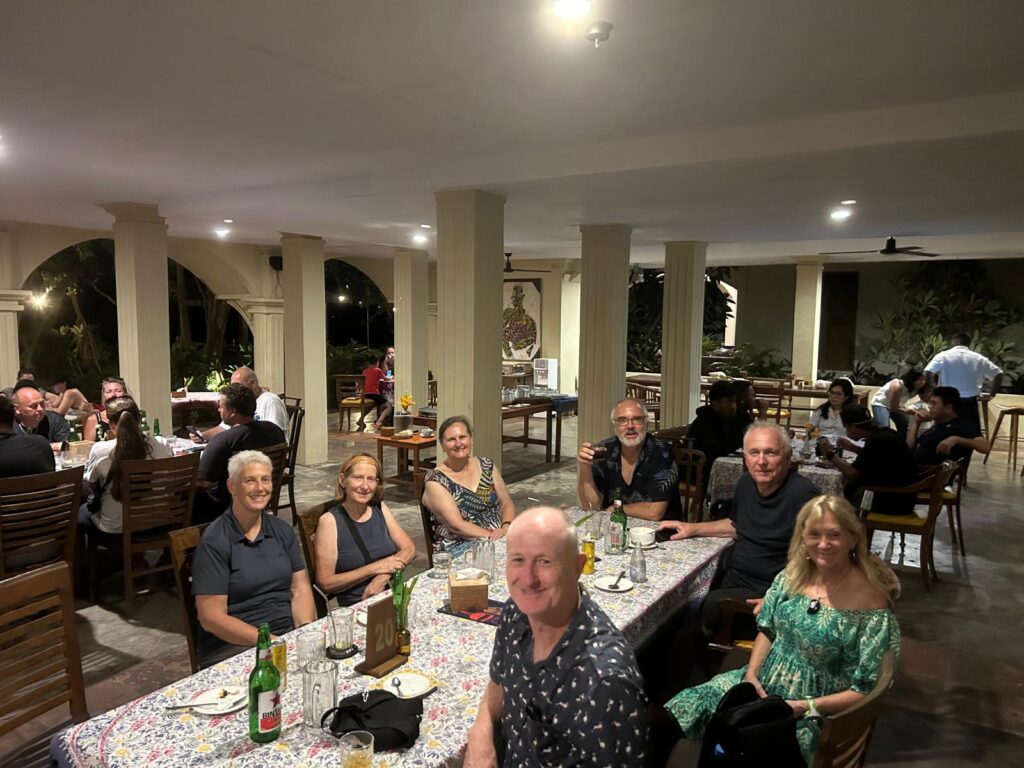
There was reasonable food at our lodge; breakfast was included (eggs any way we wanted though sunny-side up was a challenge); local cuisine for dinner at approx. AUD $7 a meal, but most nights we ventured out to the local restaurants. Probably the favourite nights out were the buffets where for about AUD $15-20 you could choose and taste a wide variety of local cuisine. The most popular drink was probably a mango or pineapple juice, or a Bintang beer. Wine and spirits were occasionally on offer but were very expensive and just seemed wrong.
One night we booked a buffet meal and were enticed by the prospect of a live band for entertainment. By the time 9pm came around and the band weren’t on yet, all but Jane and Kevin were ready for bed, and we made our way back to Baba Lagoon.
The diving
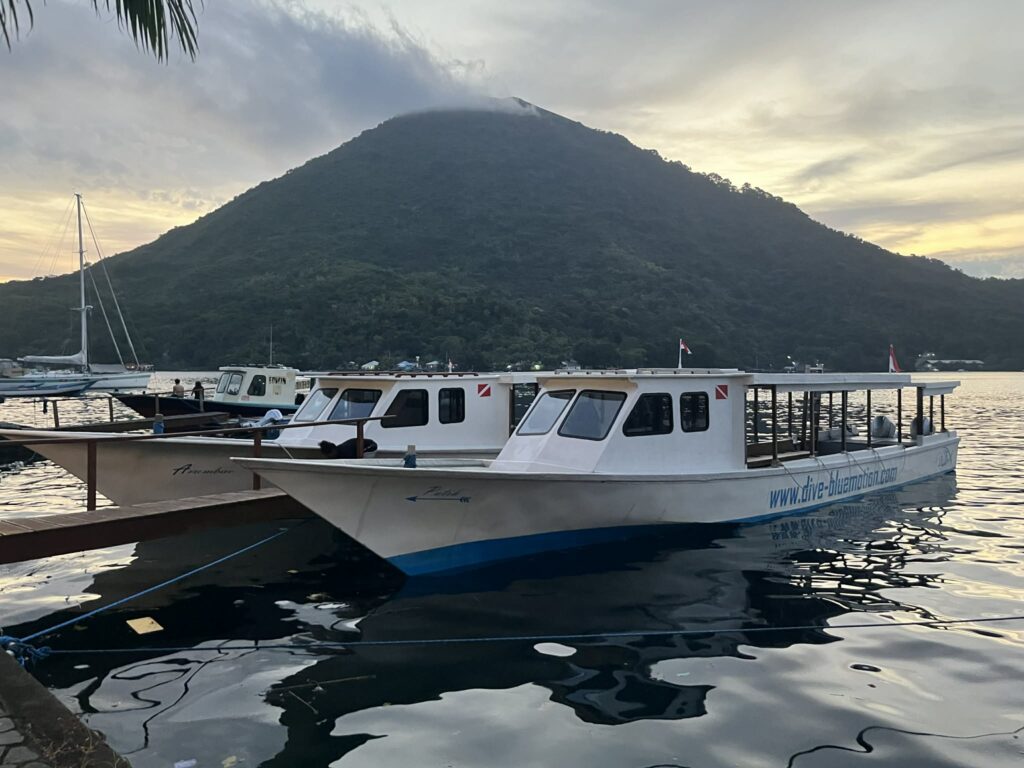
The boats were excellent; plenty of room for us 8 divers and a couple of days we had a few extra divers on board. The boats were powered by two 90-horse-power motors. Most dives were local. If we went further out, there was an extra charge of approx. AUS $45-90 for petrol which was shared by the number of people on the boat.
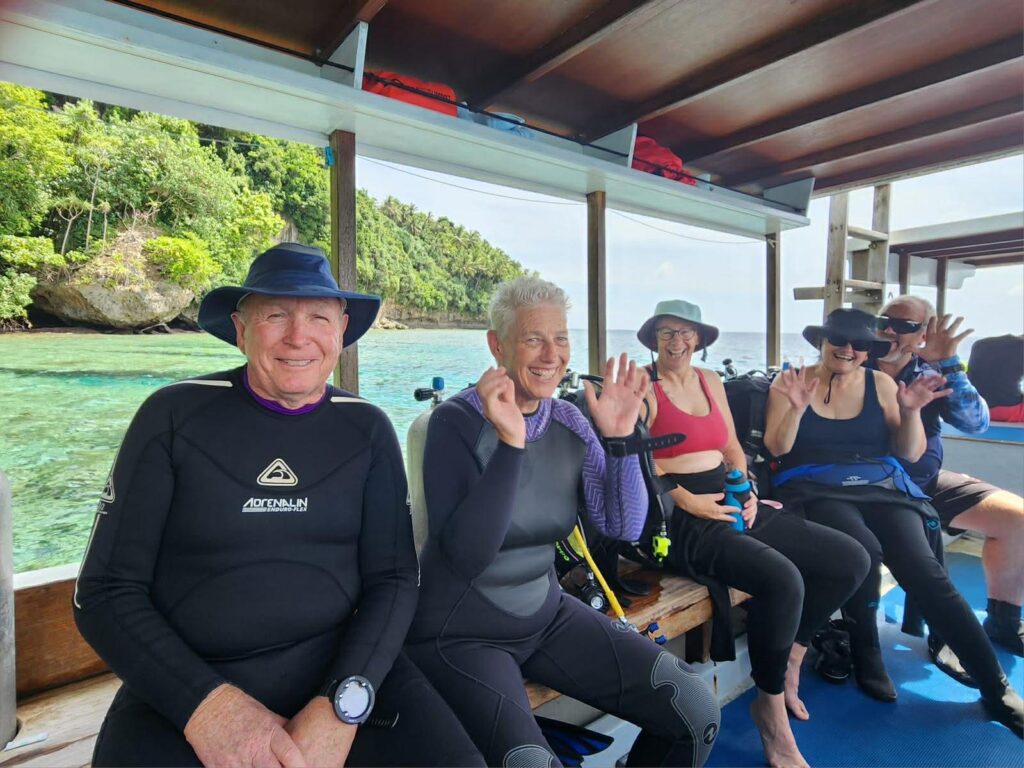
We usually had two local dive leaders, one at the front (Andre) and one at the back of the group. We were impressed with our Lead dive guide, Andre! He gave us an excellent dive brief before each dive – often with drawings – always put our safety first and explained so well that we always knew what to expect (no surprises). Each dive was usually a wall dive where we could drop down to a maximum of 30 metres before making our way up to the end of the dive at approx. 4-6 metres. The dives were a maximum of sixty minutes long.
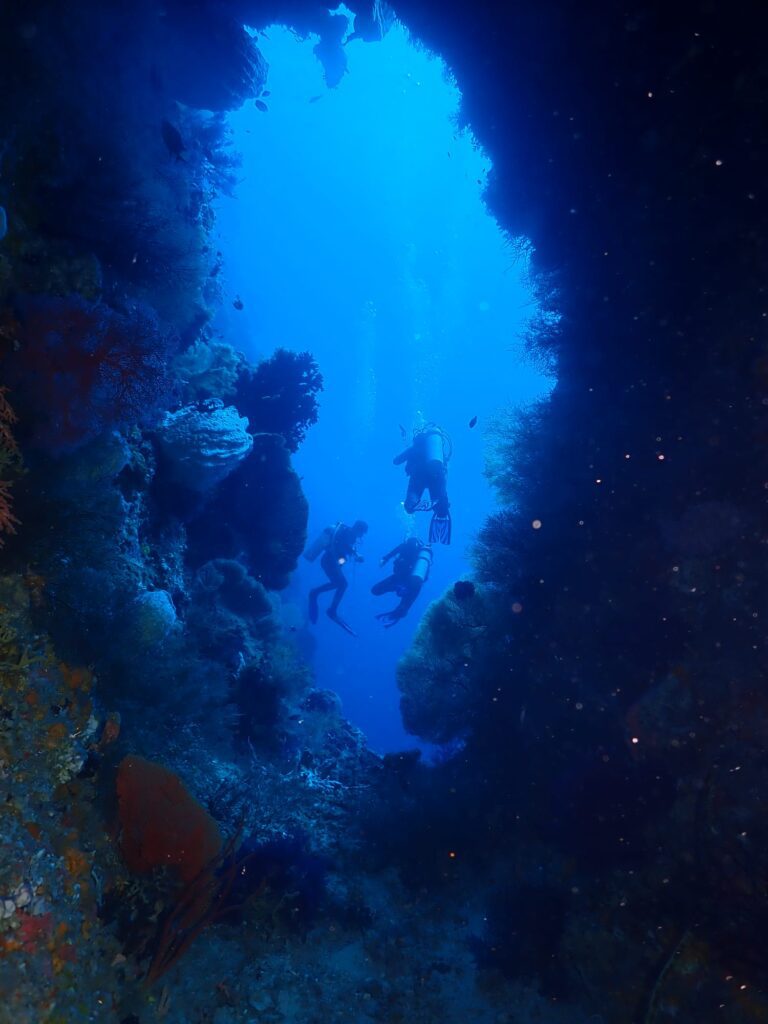
One popular dive had a swim through of approximately 10 metres long and you entered the swim through at about 27m deep and swam up to about 22m. We liked it so much, we did it twice!
What we saw
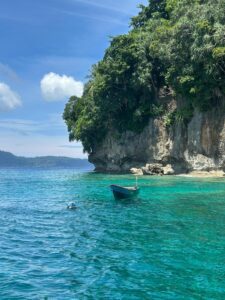
Most of the dive locations were only a short distance from an island, which was usually a small cliff, with the tropical trees as a spectacular backdrop. The coral varieties and colours were amazing; lots of huge coral fans and sponges, majority larger than us. The fish life and colours were also fantastic; not many fish that were big enough for a dinner plate, but the colours and variety were outstanding.
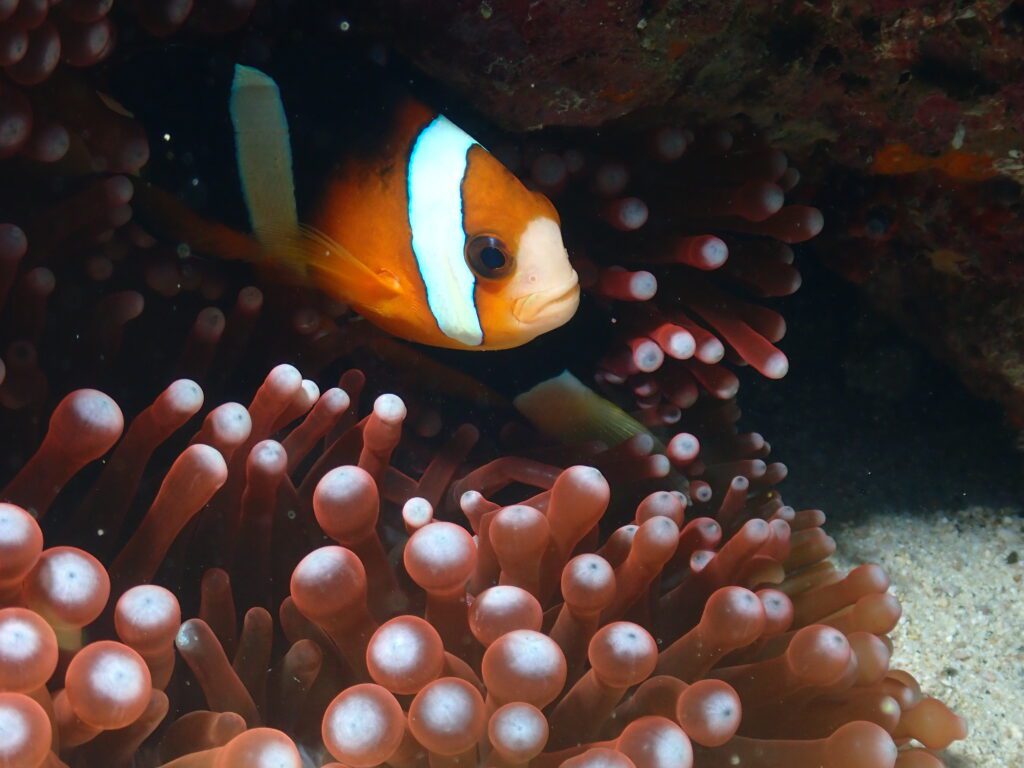
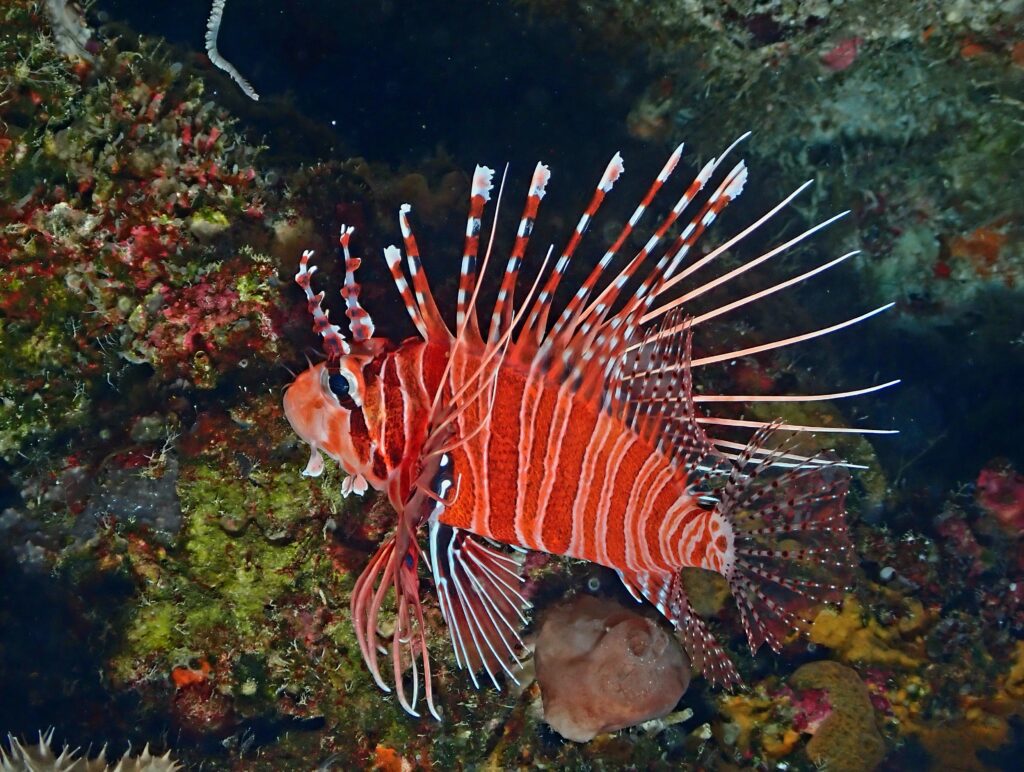
The highlights were the Moray eels – I have never seen so many different colours and sizes. There were lionfish, turtles, banded sea snakes, bump head parrotfish, clown fish – these were all seen regularly on each dive.
We saw about one shark in the distance every dive but they were very timid and disappeared when they noticed us. Less regularly we saw octopuses, Napolean Wrasse, barracuda and eagle rays.
One highlight was when on the way to a yellow-sand island (most were black sand due to the local volcano), we came across a large pod of dolphins (over 100) which we later found out were called melon-headed whales. The boat crew slowed so we could enjoy them frolicking in the boat wake. After some excited Indonesian discussion, we were told we could snorkel with them! I think we have Andre to thank for the best 20-minute experience of hanging onto the boat rope as the boat slowly cruised around as the dolphins swam 1-2metres around us. Afterwards, everyone was so excited and joyful as they shared stories of the dolphins they saw, including many babies. Even the locals were excited and said it had been many months since they last came across a pod of dolphins, particularly such a large one. I will never forget that day!
The best thing I found about Banda Neira diving was the clarity of the water. Most dives you would go down to 30 metres and you could see the ledge just drop off to an unknown depth below – likely over 100m but you could still see the bottom. Or you could see the boat on the surface like it was only a few metres above your head instead of 20+ metres away.
Night dive
One night, four members of our group (Helena, Cindy, Sue and Sonya) were keen to see the Mandarin fish known to come out at twilight. Though in the harbour and a muck dive, they returned talking excitingly of what they saw – lots of mardarin fish, octopuses, pipefish, lionfish and razorfish, as well as lots of sea urchins walking around!
Keep an eye out for one of the trip members doing a slide show at one of our club meetings in the near future to see all the great underwater shots – I’m sure you’ll be impressed.
All in all, it was a great trip with great people! I loved the diving, especially the clarity of the water. Glad we went. Looking forward to the next trip with these people!
Tim
PS. Thanks to Intrepid group members for their photos and videos.