By David Boyle.
My trip to South America had been on the agenda for 5 years, it was planned, booked and partly paid for back in 2019 for a 2020 trip…. then we all know what happened with overseas travel. The Galapagos was just part of a 5 week adventure where we went to Chile, Argentina, Brazil, Peru and Ecuador. This article will just cover the time in the Galapagos. What most of us know about the Galapagos is from watching David Attenborough’s documentaries.
Overview
So, where are the Galapagos Islands?
The Archipelago of the Galapagos is a group of 19 islands, 13 large and 6 small, and dozens of islets and rocks that cover an area of over 44,000 square kms. Its closest point to the mainland is over 1000kms from the West coast of Ecuador in South America. We had just finished 4 days in Peruvian Amazon jungle and had to overnight in Lima, the capital of Peru. Then it was a flight to Guayaquil in Ecuador to then board a flight to the Galapagos.
Galapagos Natural Wonders
Flora & Fauna of the Galapagos
The Galapagos are a naturalist’s dream, filled with a diverse array of plants and animal life unique in the world. This includes such exotic flora and fauna as giant Cacti, Finches, flightless Cormorants, and the famed giant Tortoise, whose average lifespan of 100 years makes it the longest living vertebrate on earth. Rumor has it that there may even be a “great-grandpa” Tortoise that hatched around the time Darwin arrived at the islands. There are 36 animal and bird species that are endemic to the Galapagos, the most notable of these are the giant Tortoise, Marine Iguana, Land Iguana, Flightless Cormorant, Galapagos Hawk, Galapagos Penguin and Galapagos Sea Lion to name a few.
Galapagos Geology
The Galapagos are a marvel of geological activity. These volcanic islands are relatively new in the grand scheme of things (Isabela and Fernandina, the biggest islands, are said to be less than one million years old). Their formation occurred on the seafloor, at which point three tectonic plates converge and produce volcanic processes that continue to this day. There are 21 volcanoes in the Galapagos, 13 of which are still active and one of these, La Cumbre, erupted in March 2024.
Charles Darwin in the Galapagos
The name of Charles Darwin and his famous book, The Origin of Species, will forever be linked with the Galapagos Islands. Although he was only in the Galapagos for five weeks in 1835, it was the wildlife that he saw there that inspired him to develop his Theory of Evolution.
Sir David Attenborough’s documentary Galapagos 3D, which made the Archipelago even more famous, but also raised environmental awareness of its fragility, as a way of promoting its care and preservation. Sir David is inspiring new generations of children and young people through his documentaries and books, which will remain as the best legacy of a man whose life has been devoted to love and protect our living planet. Sir David said that the Galapagos “is huge global treasure which has no parallel anywhere else in the world”. Now 97% of the Galapagos Islands are protected under national park status.
The trip
Landing at Seymour airport on the island of Baltra, I had a window seat and was greeted by land Iguanas sitting on the edge of the runway watching our plane land with no concern at all. After disembarking the plane, we were forced to pay $400 USD (that’s $614 AUD) in national park fees, I’m all for looking after the park but that is over the top, and they wanted USD in cash and gave no receipts!. After that initial shock we boarded a bus for a short trip to the harbor where we had a short boat trip to Santa Cruz Island. Here we got onto another bus for a 40min ride to the main harbor, Puerto Ayora. What did surprise me on this bus trip was the amount of Giant Tortoise that could been seen from the road sharing the paddock with cows. Seeing the tortoise in abundance in the wild was a good sign.
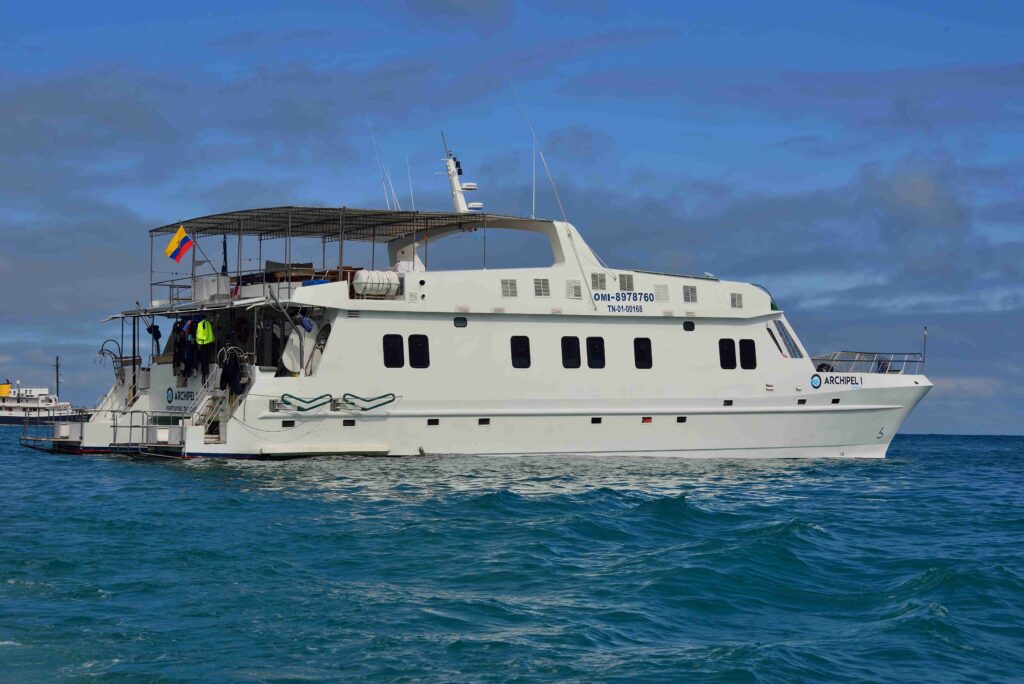
In Puerto Ayora we walked the jetty to get on our small inflatable boat to take us to our home for the next 5 days, the Archipel 1, this is a 27m catamaran that can take 16 guests, but we only had 12 on our trip. While on the jetty we were surprised to see large Fur Seals and Sea Lions who were having a nap on the jetty and we had to step around them to get to our boat. Looking over the edge of the jetty I could see several large Green Sea Turtles casually swimming underneath.
After being allocated our room and making ourselves familiar with the boat we headed back to shore to do a tour of the Fausto Llerena Breeding Centre. Here they have a breeding program that is conducted by the staff with the collaboration of scientists from the Charles Darwin Research Station. The eggs are brought from the Galapagos Islands of Pinzón, Santiago and Santa Cruz to the station. The eggs are incubated artificially, the baby Tortoises are born and reared until the age of 5 years, when they can survive the effects of introduced predators (rats, pigs and dogs). Then they are returned to their native areas. Since 1970, more than 2000 have returned to the native areas.
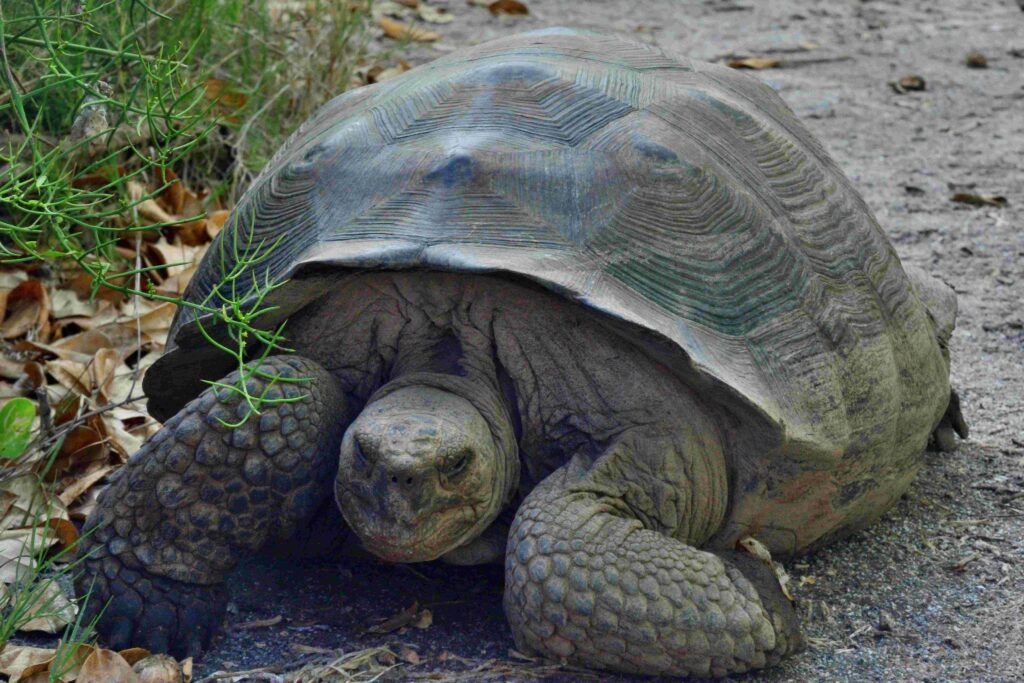
The land Iguanas of Santa Cruz, Isabela and North Seymour are also in a captive breeding program, as the populations in these areas suffered from feral dogs. One of the main attractions at the breeding center is the famous embalmed Lonesome George, a Tortoise that is estimated to have died between 93 and 109 years of age.
Moreno Point (Isabela Island)
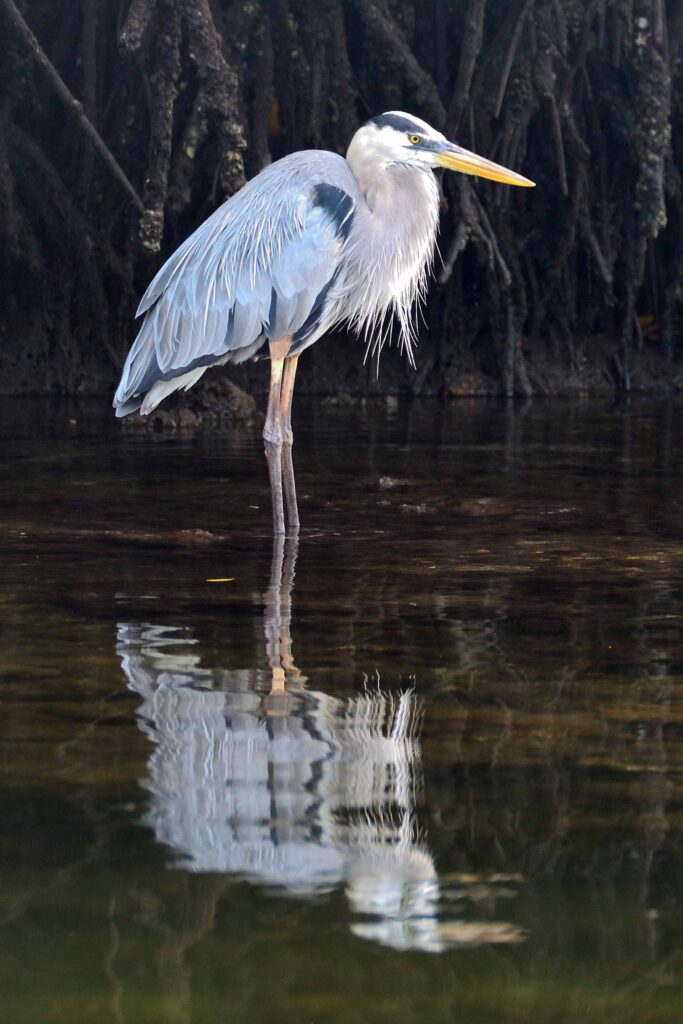
The next morning, we were taken ashore at Moreno Point which is located on the north coast of Isabela Island, between the volcanos Sierra Negra (last eruption 2018) and Cerro Azul (last eruption 2008). The trail runs along a solidified pahoehoe lava flow into a complex of coastal lagoons. The solidified lava has left strange patterns as it cooled with the occasional catus growing up between the cracks. The main attractions here are several species of birds, which are found around the lakes and mangroves. These include Great Blue Heron, Flamingos and Boobies diving into the ocean from a great height to catch fish. On the shoreline there were Marine Iguanas, Sea lions and Penguins.
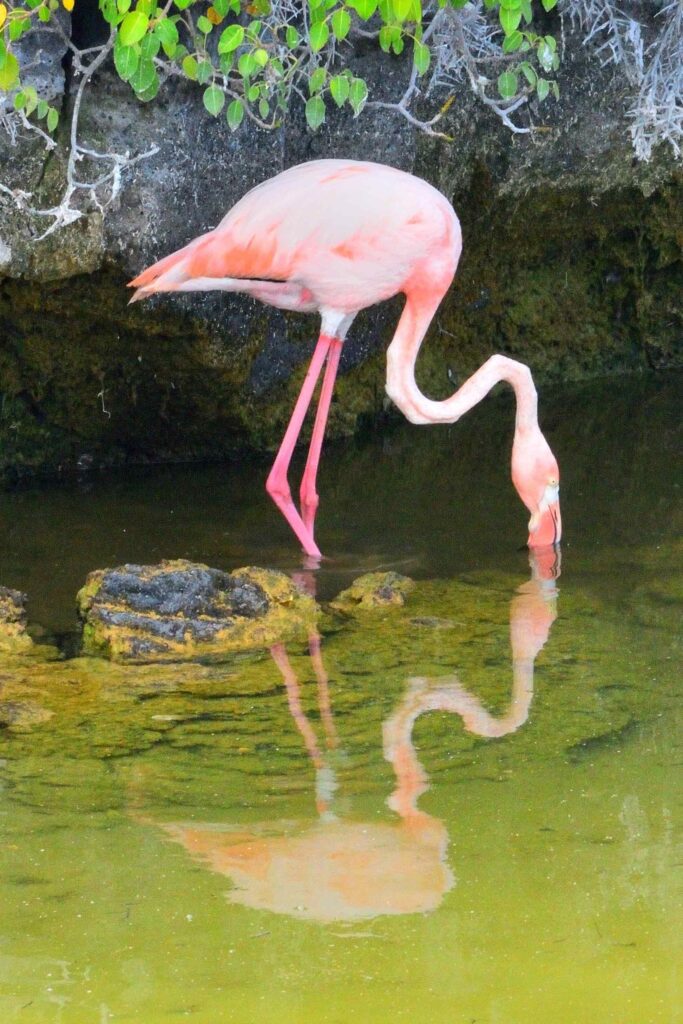
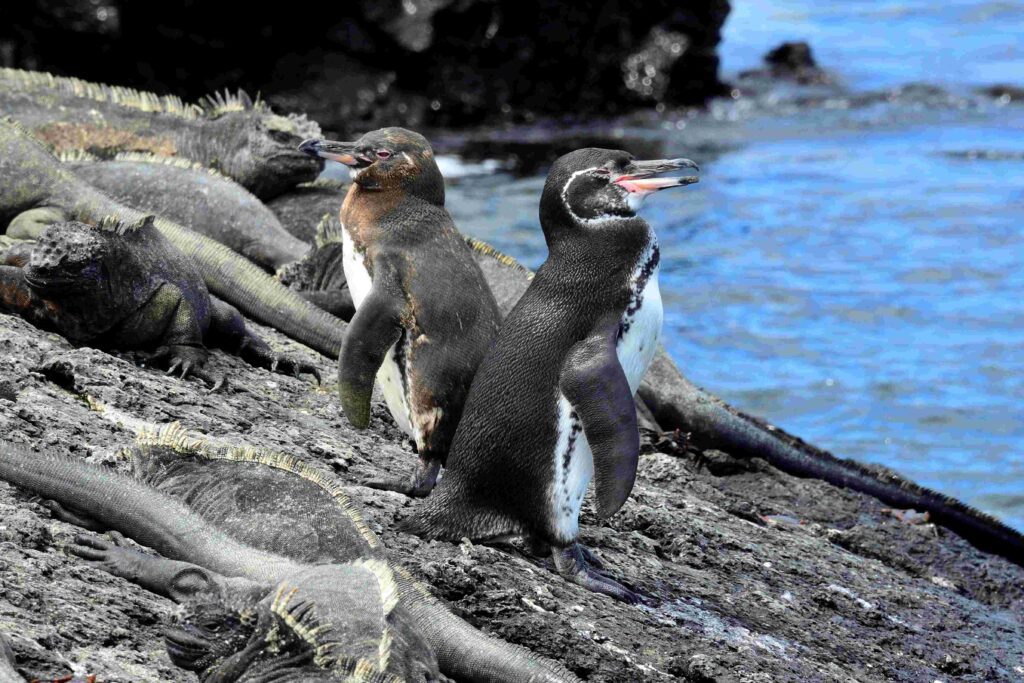
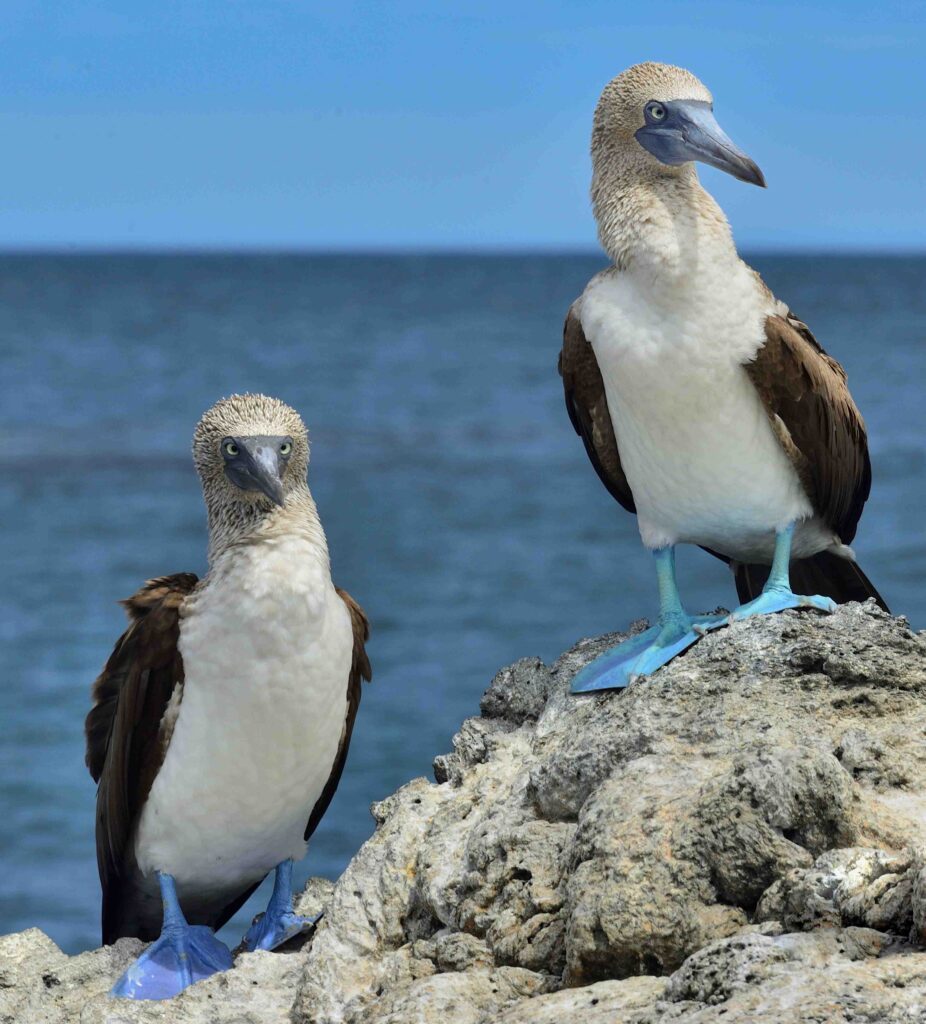
After the walk we got back into the small boats and slowly moved around the shore where we were enchanted by the flightless Cormorant going through their mating ritual and could also see baby Pelicans almost ready to leave the nest. The strangest looking bird would have to be the Blue Footed Boobies, it does not look natural, but more like someone has spray painted their feet bright blue while they were sleeping.
Back to the Archipel 1, which was anchored about 200m off shore, for a quick change into our snorkeling gear, and we were taken in closer in the inflatable boats. We were told that at this location we could see Green Sea Turtles and it didn’t take long. We swam over to the rocky shoreline and were in about 1-2 m of water that dropped to about 5m. Initial shock of the water temperature was soon overtaken by the excitement of seeing the Green Sea Turtles up close. These looked like full grow adults and were not bothered by our presence at all. You could approach close and watch them eating the seaweed and going about their business. If one swam off there was always another to keep your interest.
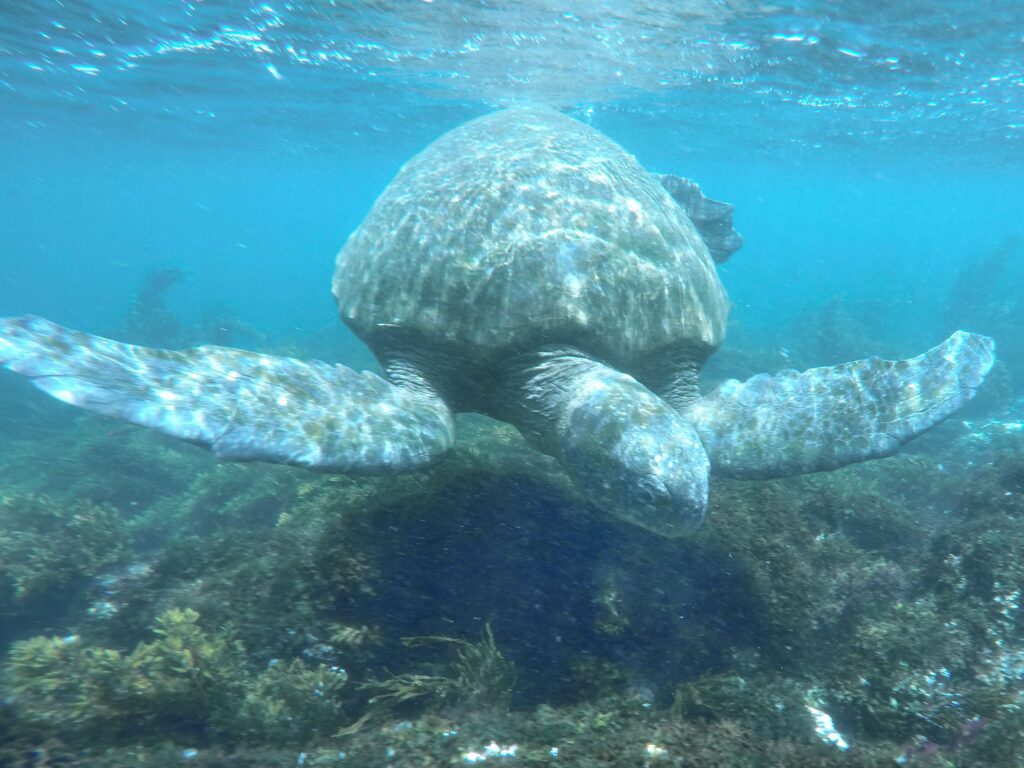
We swam with a variety of fish life including Mexican Hogfish, large schools silver bait fish, Damsel fish, schools of Sergeant Majors and of course the Turtles, for about an hour before getting back on the boat for lunch and to move to our next location.
Urbina Bay (Isabela Island)
While we were having a large lunch and some down time, the boat moved to Urbina Bay which is located along the west coast of Isabela Island, between Elizabeth Bay and Tagus Cove. It is close to the base of the Alcedo Volcano (last erupted in 1993). The coastline has undergone a major uplift in 1954, which caused the shore to expand 1.5kms out further. Here we could see corals, shells, and many other calcareous organisms exposed above water. Urbina Bay is also home to large and colorful land Iguanas and giant Tortoises of the Alcedo Volcano population. A lot of Darwin finches and Yellow Warblers can be seen as well.
The land Iguanas were large, about a meter from nose tip to tail end, and had an attitude of superiority on this island. This is probably because their natural predators tend only to hunt Iguanas under a year old, when they become too big to eat. They live in burrows that they dig and do not even move or care when you step over them, like I said, attitude.
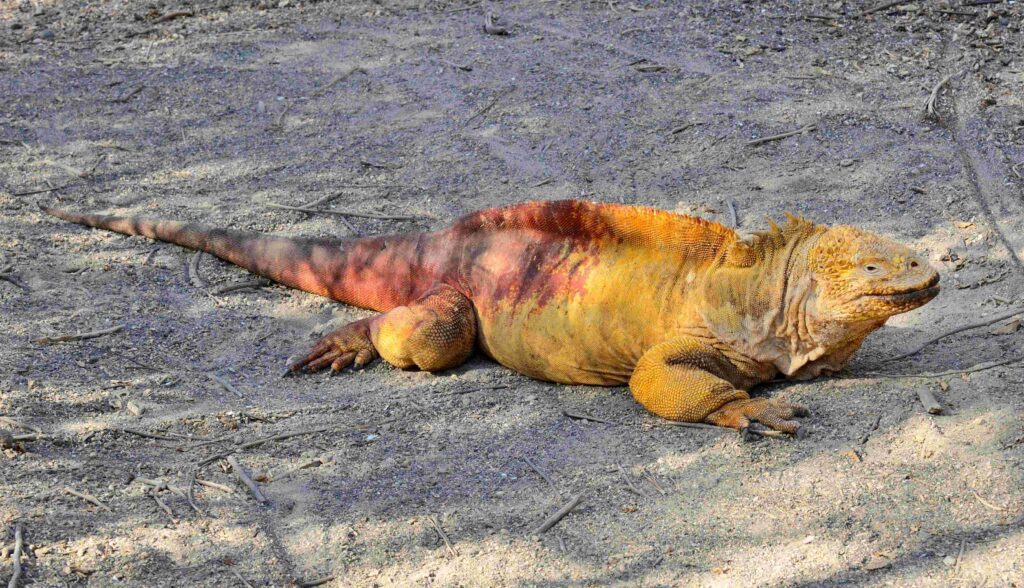
Their skin is generally yellow with white, black and brown blotches. They have a short head and powerful hind legs with sharp claws on their toes, but despite their intimidating appearance they are primarily herbivores, feeding on prickly pear leaves and fruit.
Introduced animals such as cats, dogs, pigs and rats has caused a decrease in land Iguana populations due to competition for food and predation of eggs and juveniles. There is a program to eliminate all introduced species from some of the islands. After a long walk and seeing many Iguanas and Giant Tortoises it was back to the beach where we had left our snorkeling gear and bathers, (who was going to take it?) for another swim with the Sea Turtles. This was another location where the only problem was which one to film with the GoPro, often there were 4 in your field of view. The Turtles were slowly moving along grazing on the seaweed and giving us the occasional glance while all the time being surrounded by small Wrasse. We were large schools of Galapagos Mullet, Black-striped Salema and Sergeant Majors. On the way back to shore some people were lucky enough to see several large sting rays. After dinner we moved to our next location ready for the morning.
Espinoza Point (Fernandina Island)
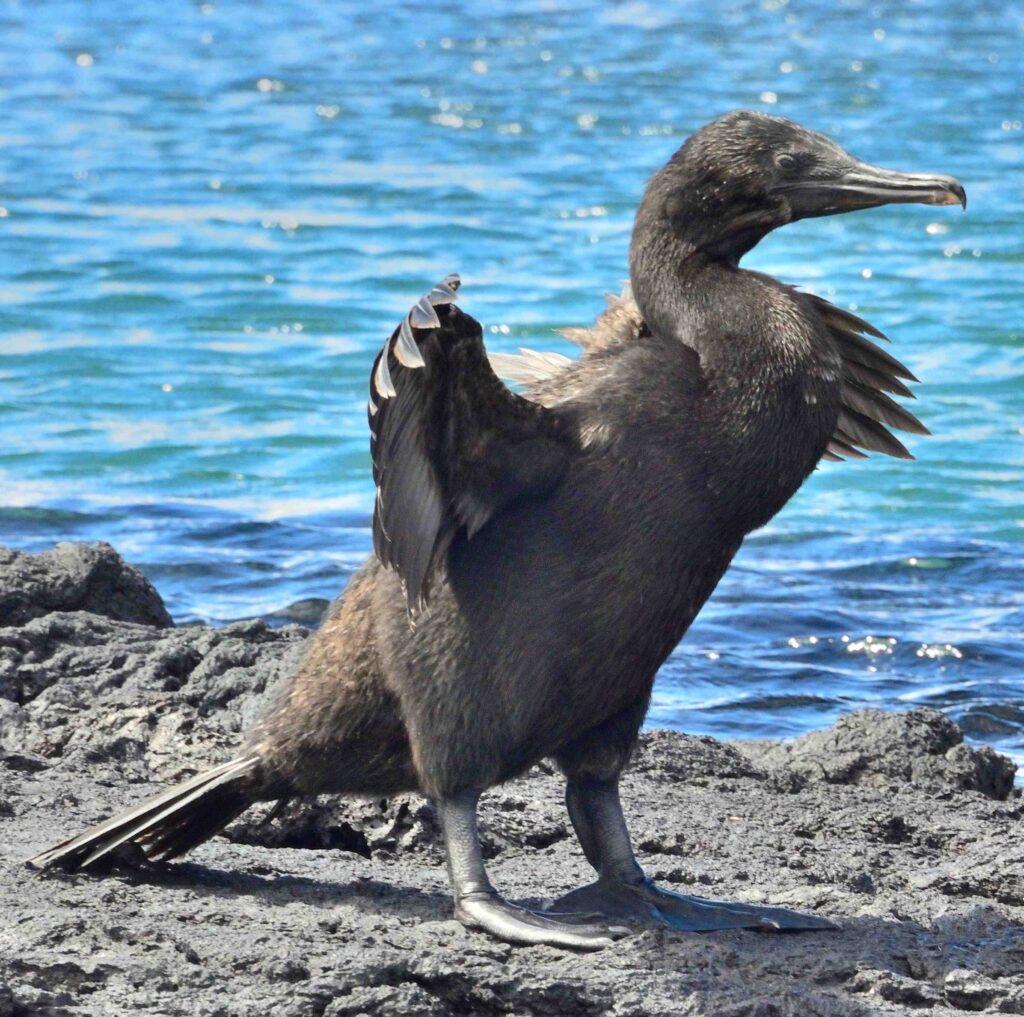
Fernandina is the third-largest island in the archipelago and has a single visitor site: Punta Espinoza, located at the northeastern tip of the island. Marine Iguanas congregate in larger groups than on any other island. They bask around in the sand, swim near the shore and sometimes block the way at the landing dock. Among the unique species found here, is the flightless Cormorant. This bird had to adjust its way of survival and has perfected its skills of finding food in the ocean. Their wings, tails and feet progressively adapted for swimming. To see these birds is to witness evolution happening right in front of you.
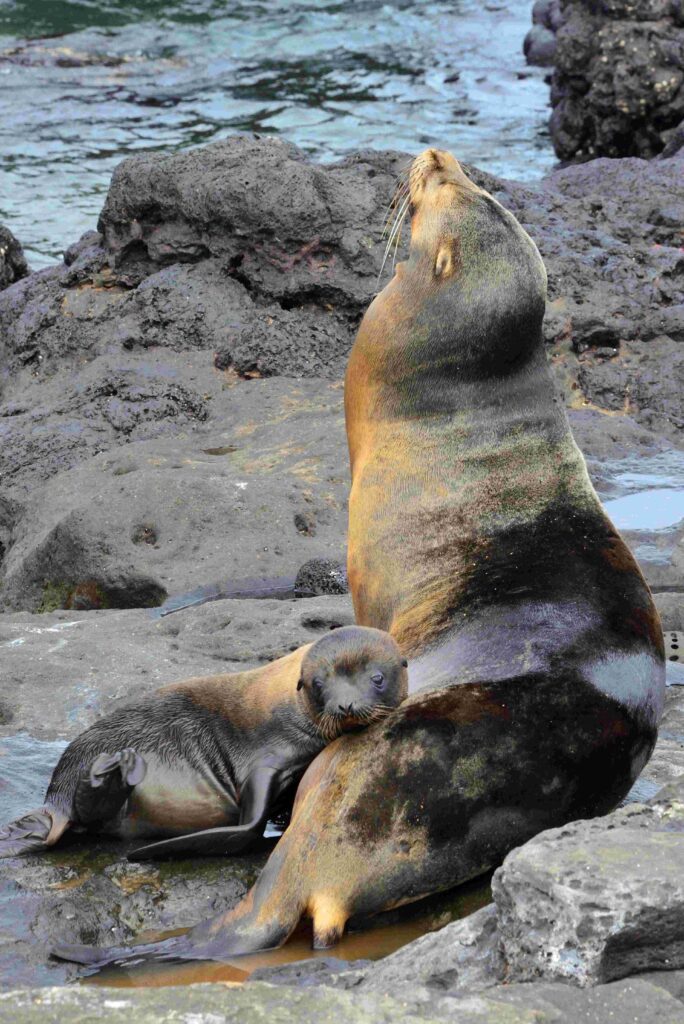
We went ashore in the small inflatables again only to have our path blocked by a mother Sealion feeding a baby, no complaints here. Then as predicted there were hundreds of marine Iguanas basking in the sun while blowing salt out of their nose. Like the land Iguanas they were not at all bothered by our presence and you had to step over them on the beach as there were so many and they would not move. At this time of the year we were lucky to see many baby Sea Lions, estimated to be only 2 weeks old and just learning to walk and swim, and without having yet learnt fear, would waddle right up to you.
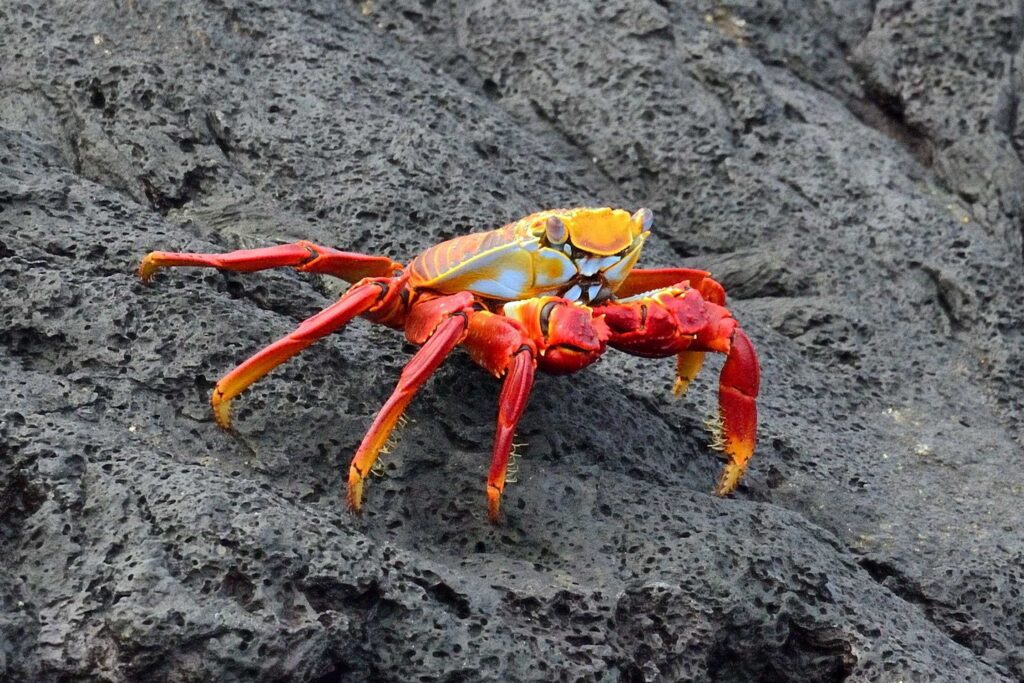
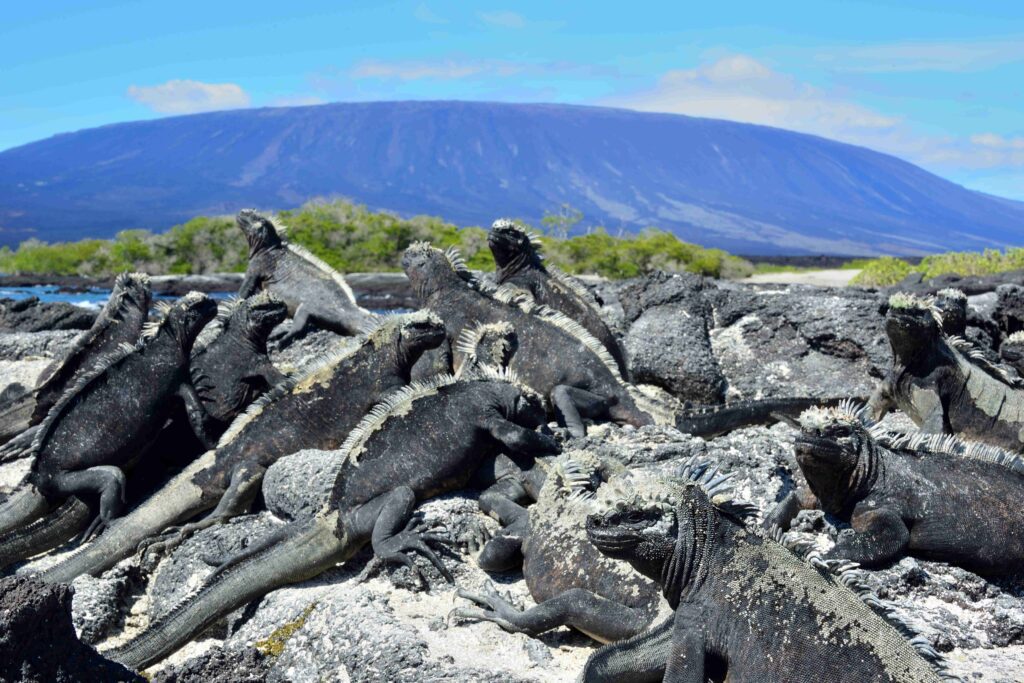
Anywhere near the shore you would see Sally Light Footed Crabs, these crabs were in abundance and being bright red stood out against the black lava rocks. Speaking of lava… It seems everywhere you go in the Galapagos, little lava lizards scurry about. These small lizards, some reaching a foot long or more, hang out on rocks or in scrubby vegetation. They were even seen sunning themselves on the backs of Marine Iguanas. There are seven subspecies of lava lizards in the islands, they have been on the different islands long enough to develop different characteristics according to the environment of each island. More examples of evolution in action. This location also gave us a spectacular view of a lava field with Iguanas piled up on top of each other with the volcano in the background, a truly prehistoric view. At this location we were able to again swim with the many Sea Turtles but also the Marine Iguanas. Once they have warmed up on land, they head back to the ocean to cool off and feed on the algae. The Iguanas were just as approachable underwater as they were on land and I could swim right up to them and video them feeding. We were also visited by several Sea Lions that were just showing off spinning around and blowing bubbles right in front of us. Here I also saw a Hawksbill Turtle, this species is not as abundant in the Galapagos and this was the only one I saw on the trip. It is known for its distinctive carapace with overlapping and serrated scales, and elongated head with a beak-shaped mouth.
Vicente Roca Point (Isabela Island)
Whilst having lunch we cross the Bolivar Channel for the last time to Vicente Roca Point, just at the mouth of Isabela’s seahorse-shape. This site had a sheltered bay and if you followed the cliff line and underwater wall you will enter a dark cave below a spectacular arch.
Just around the corner the collapsed amphitheater of Ecuador volcano (last erupt 1150) offers another impressive view. The calmer waters of the coves are well-protected against the ocean swell so a great place for snorkeling amongst various species of marine life.
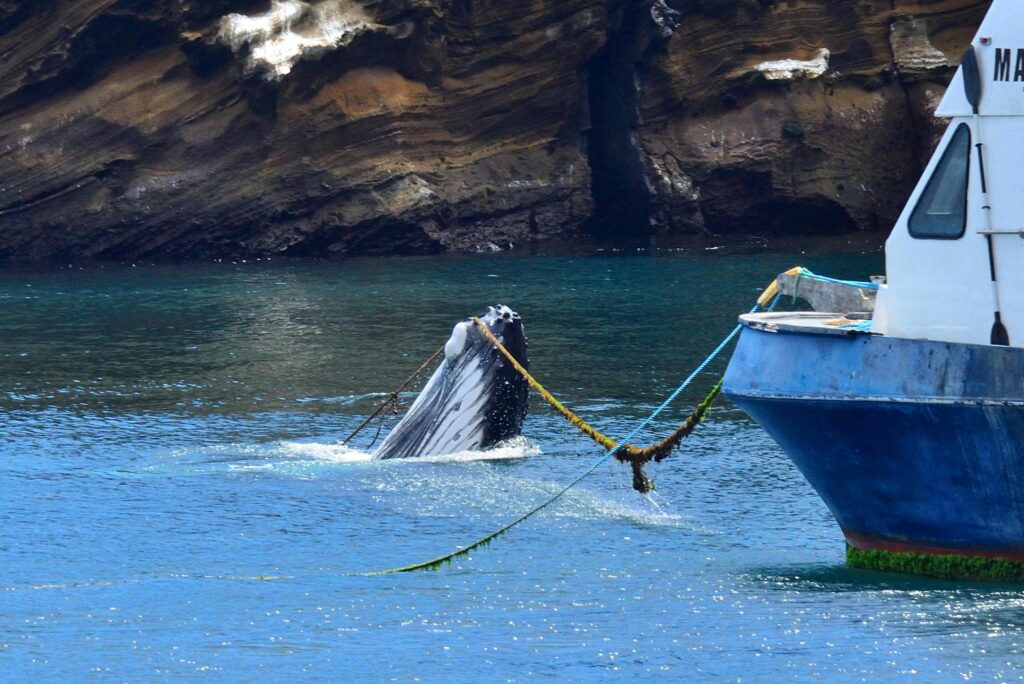
I went on to the top deck of the boat to see the other passengers staring at the ocean, they said they had seen a Whale. I raise my camera to my eye hoping to see something in the distance just as the whale breached out of the water with the anchor rope of a nearby boat on its mouth, it was not entangled, I can only assume it was just playing as we saw it swim away.
Snorkeling again and almost immediately I was greeted by several green Sea Turtles, this area probably had the best visibility and with the sunlight beaming through the water and so many Turtles to look at it was truly a memorable time. I noticed that when the Turtles were eating there were always many Wrasses around their mouth, I can only guess they were picking up food scraps, they were lucky not to be eaten accidentally. I would have been happy to stay there with the Turtles, but the group had to move on and we followed the cliff around to the cave.
The wall was covered with colorful orange coral and numerous fish life. There were many King Angel fish, Surgeon fish, Damsel Fish, Schools of Sergeant Majors and Parrot Fish and the occasional Hawkfish. As we approached the cave, roaring echoes of the waves accompany us and a couple of startled Sea Lions raced past me, not sure who go the biggest shock. This whole wall area had many Mexican Hogfish and many species of smaller Wrasse, Pacific spotted Scorpionfish and Leather Bass. This is one of a couple of places I would have really liked to have had my scuba gear. Lifting your head out of the water you would see the Blue Footed Booby’s resting on the rock ledges above you.
After leaving Vicente Roca Point, we cross the equator twice, once heading north, going round the top of the island, then again heading south to our next location.
Egas Port (Santiago Island)
Egas Port is a black beach located on the west side of Santiago Island. Volcanic tuff deposits have favored the formation of this special black sand beach and this is the main attraction of the Island. This site is called Puerto Egas because there was an attempt by Hector Egas to start the exploitation of salt, which failed. After all, the price of salt on the continent was very cheap and did not justify its exploitation in the Galapagos. The project was abandoned and they left their infrastructure. As we came ashore we noticed the tracks of the sea Turtles that had been coming to shore to lay their eggs. While walking around this island we saw more land Iguanas, Sea Lions with babies, Lava Lizards, variety of bird life including the Giant blue Herron and Galapagos Hawk. There were so many Marine Iguanas you had to be careful where you stepped.
After the walk we snorkeled off the beach which had a reef close to shore. For some reason the fish were a little shy at this location, but we still managed to see many Angel fish, schools of yellow tailed Surgeon fish, Parrotfish, more Hawkfish and even a Marble ray. This reef was flat and interlaced with many deep chasms that I could not see the bottom of.
Rabida Island
This afternoon we moved to Rabida Island and it is unique because of the red color of the rocks and sand. The volcanic material in this island is very porous and external factors such as rain, saltwater and sea breeze have acted as an oxidizing agent making the land and beach red. A short walk along a trail leads us to a coastal lagoon behind the beach that allows for the observation of land birds like Finches, Doves, Yellow Warblers and Mockingbirds. There is also a colony of Flamingos at the lagoon which were present when we visited. As they spent all their time preening their feathers, most of the views of them looked headless! This island is covered with large Cactus so you had to be careful where you walked and what you put your hands on.
After the walk we changed on the beach into our snorkeling gear next to the sleeping Sea Lions and headed off along the small Catus covered cliff. Another site that had abundant fish life. Here we saw White tip reef sharks, schools of yellow tailed Surgeon fish, Hawkfish, King Angel fish, Damsel fish, Black-striped Salema, Parrot fish giant Blennies and Wrasse.
Black Turtle Cove (Santa Cruz Island)
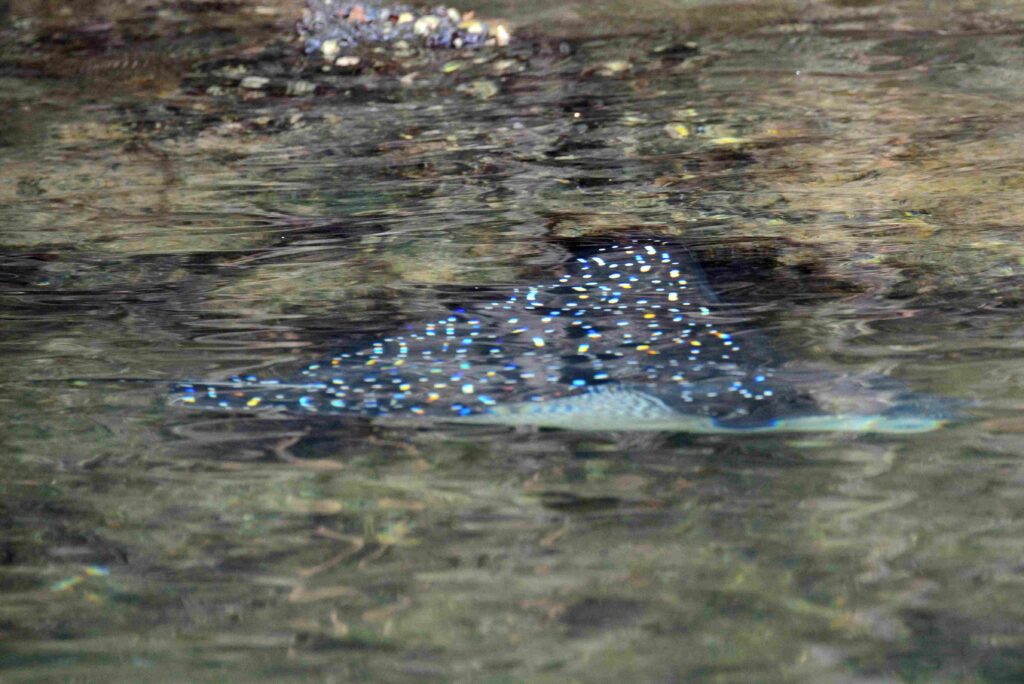
This was our last day at the Galapagos and after breakfast we went out in the inflatables for the last time. Our brief adventure was short but enchanting, we explored the green landscape of Black Turtle Cove, which is mostly composed of mangrove trees that host innumerable birds and aquatic species. This very quiet emerald lagoon and surrounding shallow bays enables the easy observation of sea Turtles and as well as groups of sharks. While very slowly moving along in a couple of meters of water we were able to see numerous White tip Reef Sharks (about 2m) and smaller Black tip Sharks resting on the bottom. They slowly moved as we got nearer. There were Spotted Rays, Leather Back Turtles, and Blue Herron. This area seemed as it was a nursery for marine life and at one stage there was 6 white tip Sharks under us, I was being careful not to fall in! Sadly, this was the end of our cruise adventure around the Galapagos Islands. We now headed to Baltra airport to start the long trip back home that took 5 flights.
The Galapagos Islands are famous for their unique and unusual wildlife and a source of proof for the theory of evolution. They are home to a wealth of unique plants and animals found nowhere else in the world. I feel privileged that I had the opportunity to spend time on this group of islands and come to know some of its wildlife, it was an experience that I will never forget. If you ever visit South America, make sure you put the Galapagos Islands on your must visit list.